The Overtourism virus:is Responsible tourism the antidote to Tourismophobia?
I’ve been in the travel and hospitality game long enough to remember some truly bizarre industry moments. But none stand out in my memory quite like the 'kamaki' protests in Crete in the 1990s.
Picture this: postcard-perfect sandy beaches , ancient ruins, and tourists absolutely openly demanding more flirtation.
It sounds like a storyline from a holiday comedy, but it was deadly serious.
The newly recognised AIDS virus had, understandably, made the legendary Greek ‘kamaki’ (the local art of intense, passionate romance) grind to pause.
And for many visiting ladies, this lack of romantic attention was a serious harm in their holiday experience.
They protested because a core tourist attraction — the Greek lover — had temporarily closed shop.

As a teenager watching this unfold, I found it simultaneously hilarious and profound.
It wasn’t about the price of a pint or the quality of the hotel buffet; it was about the human experience and the perceived quality of life during a holiday.
Fast forward three decades, and the specific health crisis has changed, but the underlying conflict—the tension between the visitor experience and the local reality—has not.
In fact, it has morphed into something far more pervasive and damaging: Tourismophobia.
As digital services expert focusing on the travel and hospitality sector,
I’m here to argue that the common thread linking these two eras is not profit,
but the fundamental struggle for quality of life.
And if we, as an industry, fail to address this, our entire model is at risk.
This article will define the modern crisis, explore the true costs of overtourism, and outline why responsible tourism strategy is the only viable antidote to tourismophobia.
Read also: Embracing Slow living & Slow tourism in a fast-paced world
The anatomy of an absurd protest: when flirting became a tourist attraction
To understand the severity of tourismophobia today, we must first appreciate the absurdity of the past.
The ‘kamaki’ culture in places like Crete and Rhodes was a fascinating, often theatrical, part of the local scene.
It was a form of cultural interaction that, whilst sometimes problematic, was undeniably part of the destination’s unique selling proposition (USP) for certain demographics.
When fears surrounding the AIDS epidemic peaked, the local ‘kamaki’ artists pulled back.
The resulting protest wasn't just a minor incident; it was a clear signal that tourists felt entitled to a certain kind of experience, and that they felt cheated when that experience was compromised by a local health crisis.

The key takeaway here is simple: the value proposition of a destination is often built on intangible, human-centric elements. When those elements are disrupted, the perceived value collapses.
In the 90s, the disruption was a health scare that impacted local behaviour. Today, the issue is the huge number of visitors impacting the quality of life of locals.
While the root cause is different, the resulting frustration felt by both tourists in the '90s and local residents today is the same.
Defining the modern crisis: what exactly is Tourismophobia?
The term tourismophobia is relatively new, but the sentiment is ancient. It describes the growing fear, resentment, and even hostility exhibited by local residents towards tourists due to the negative effects of overtourism.
It’s not simply about disliking crowds; it’s a profound anxiety that the tourist economy is actively destroying the fabric of their community.
Beyond the numbers: the true cost of overtourism on local quality of life
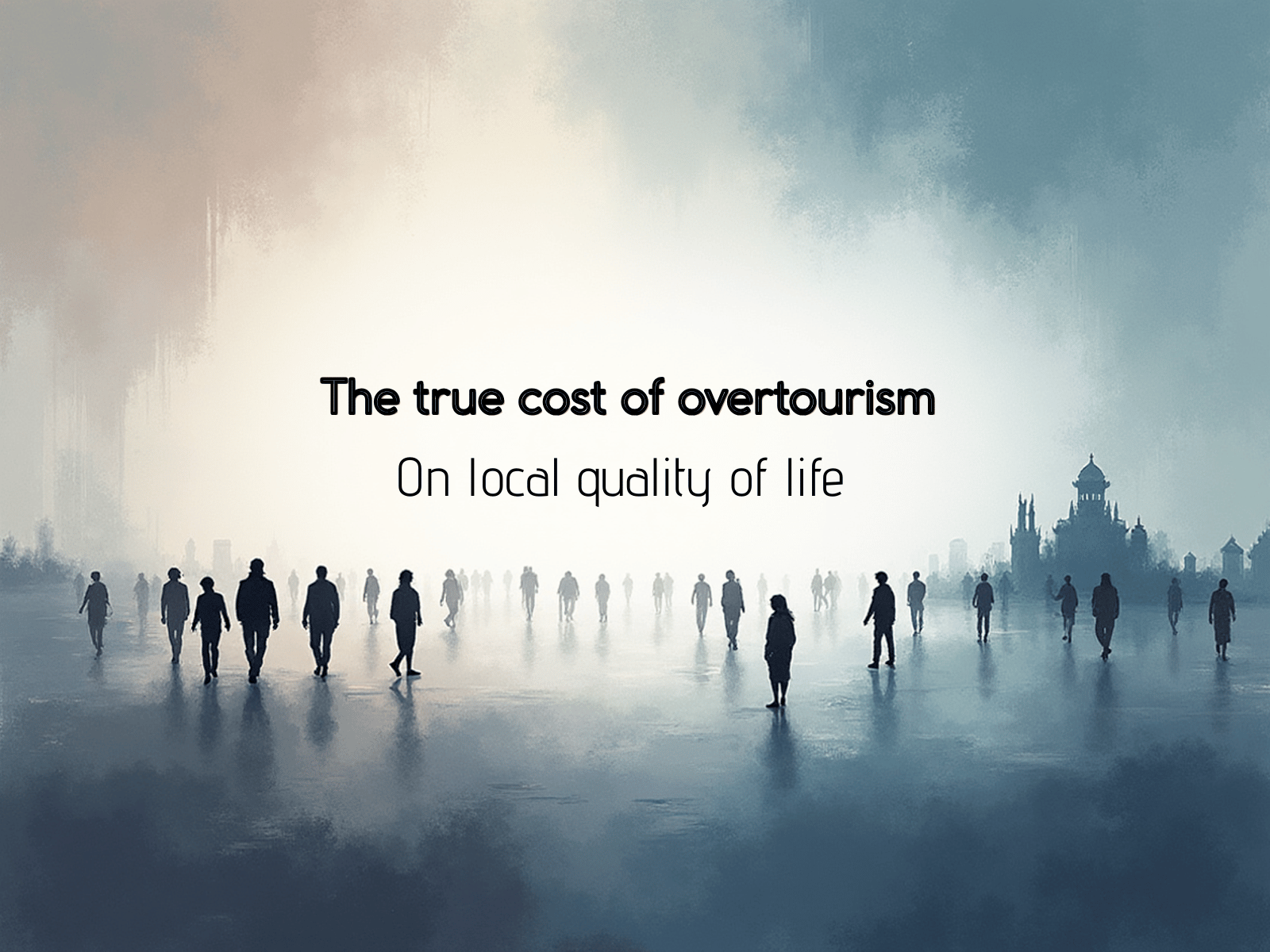
For decades, the success of the travel industry was measured almost exclusively by metrics like occupancy rates, visitor numbers, and total revenue. More was always better.
This relentless pursuit of volume, however, has led to critical failures in destination management.
The costs associated with overtourism are not just environmental (though they are severe); they are deeply social and infrastructural:
Housing crisis and gentrification: In cities such as Barcelona, Amsterdam and Venice, short-term rental platforms have depleted the long-term housing supply. Locals are being priced out of their own neighbourhoods, which is leading to the destruction of traditional communities. When local bakers and primary school teachers can no longer afford to live near their place of work, a destination loses its soul.
Infrastructure under strain: a massive increase in visitors is putting essential services under strain. Rubbish collection, public transport, the water supply and even emergency services struggle to cope. This directly reduces the quality of life for permanent residents, who often feel as though they are compromising their own comfort in order to fund the tourist experience.
Cultural exploitation: when authenticity is replaced by performance, local culture becomes a commercialised spectacle. Traditional festivals, markets and rituals are exploited purely for the benefit of tourists, which strips them of their original meaning and value.
Environmental damage: from coral bleaching caused by sunscreen to excessive waste generation and air pollution resulting from high flight volumes, the environmental impact is unsustainable. It is the locals who bear the consequences of this degradation long after the tourists have gone home.
In short, tourismophobia is the natural, defensive reaction of a community being consumed by an industry that prioritises external profit over internal wellbeing.
The shift in value: from flirtation rights to sustainable travel marketing
What the 90s protest and the current crisis share… is the blinding truth that profit alone is a terrible compass for the travel industry.
When the focus shifts entirely to the transactional—how much money can be extracted—the human element is crushed.
Today, the industry faces an ethical imperative.
We must pivot from simply selling beds and flights to selling sustainable travel experiences that enrich the host community.
Why profit alone fails: the ethical imperative in destination management
For years, many destinations operated under the assumption that economic benefits would trickle down and solve all social problems.
We now know that this is nonsense. Uncontrolled tourism leads to the concentration of wealth, rather than its fair distribution.
This is where the role of the modern digital services expert becomes crucial.
We are no longer just selling a holiday; we are shaping perception and managing expectation.
A successful responsible tourism strategy must involve genuine stakeholder engagement.
This means bringing local residents, small businesses, and community leaders into the planning process, not just the large hotel chains.
If a destination's marketing campaign promises 'authentic local experiences,'
but the reality is that locals resent the visitors, the marketing is fundamentally dishonest and unsustainable.
Our digital marketing for travel must reflect the reality we are striving to create, not just the fantasy we are trying to sell.
Responsible tourism: the strategic antidote
If tourismophobia is the virus, then responsible tourism is the only viable vaccine.
Responsible tourism is not about stopping travel; it’s about making travel better.
It ensures that the economic benefits are maximised for the host community, the environmental impact is minimised, and the cultural integrity is respected.
This pivot is not merely altruistic; it is a smart business strategy.
Modern travellers—particularly Gen Z and Millennials—are increasingly conscious consumers.
They actively seek authentic travel experiences and are willing to pay a premium for brands that demonstrate genuine commitment to sustainability.
Implementing sustainable travel marketing strategies
Targeted SEO content strategy: shift the focus from generic, high-volume keywords (e.g., "cheap holidays in X") to niche, high-value keywords (e.g., "slow travel itineraries in X," "community-led tours in X," "eco-friendly accommodation in X"). This attracts a more mindful, higher-spending, and less disruptive traveller.
Business coaching for local integration: it helps hospitality businesses to restructure their operations. This includes providing them with guidance on sourcing locally, fairly employing local labour, and actively contributing to community projects. These efforts are then highlighted in their marketing, proving their commitment to responsibility rather than just promising it.
Digital advertising for demand management: instead of running generic campaigns, use sophisticated digital advertising to manage travel demand dynamically. This involves promoting travel during off-peak seasons, showcasing lesser-known regions and using geo-targeting to distribute visitors away from overcrowded attractions. For example, it would be better to promote a walking tour of a quiet neighbourhood than to push another ticket to the already overcrowded main attraction.
Read also: The art of unrushing: SEO strategies for Slow & Experiential travel brands
Measuring success beyond occupancy rates
To truly combat tourismophobia, we must change how we measure success.
We need to move beyond RevPAR (Revenue Per Available Room) and embrace metrics of Destination Resilience and community satisfaction.
New key performance indicators (KPIs) should include:
Local satisfaction index: regular surveys measuring resident sentiment towards tourism.
Equitable distribution of revenue: tracking how tourism spend benefits small, local enterprises versus large, international chains.
Carbon footprint reduction: measuring the environmental impact per visitor.
Cultural preservation investment: tracking funds allocated to maintaining local heritage and supporting traditional crafts.
When a destination can confidently market itself on its high local quality of life and its commitment to sustainable tourism development, it attracts the right kind of traveller—the one seeking an authentic travel experience, not just a cheap photo opportunity.
Conclusion: diagnosing the future of travel
The journey from the absurd kamaki protests of the 90s to the serious threat of tourismophobia today demonstrates one immutable truth: the travel industry cannot succeed if it alienates its hosts.
The conflict has always been about human value. Back then, tourists felt their human value (the right to romance) was compromised.
Today, locals feel their human value (the right to a peaceful, affordable life) is compromised.
The solution is not to stop travelling, but to start travelling responsibly.
Responsible Tourism is not a niche market; it is the future of destination management.
It is the strategic framework that ensures the industry’s longevity by protecting the very assets—the people, the culture, and the environment—that make a place worth visiting in the first place.
If your hospitality business or destination is struggling with the pressures of overtourism,
or if you are looking to build a robust, sustainable brand that attracts the conscious consumer,
then it’s time to invest in a strategic SEO content strategy and expert business coaching designed for the modern ethical imperative.
The antidote is ready. Are you ready to administer it?